
Christmas This Year
A song to offer catharsis during the holiday season

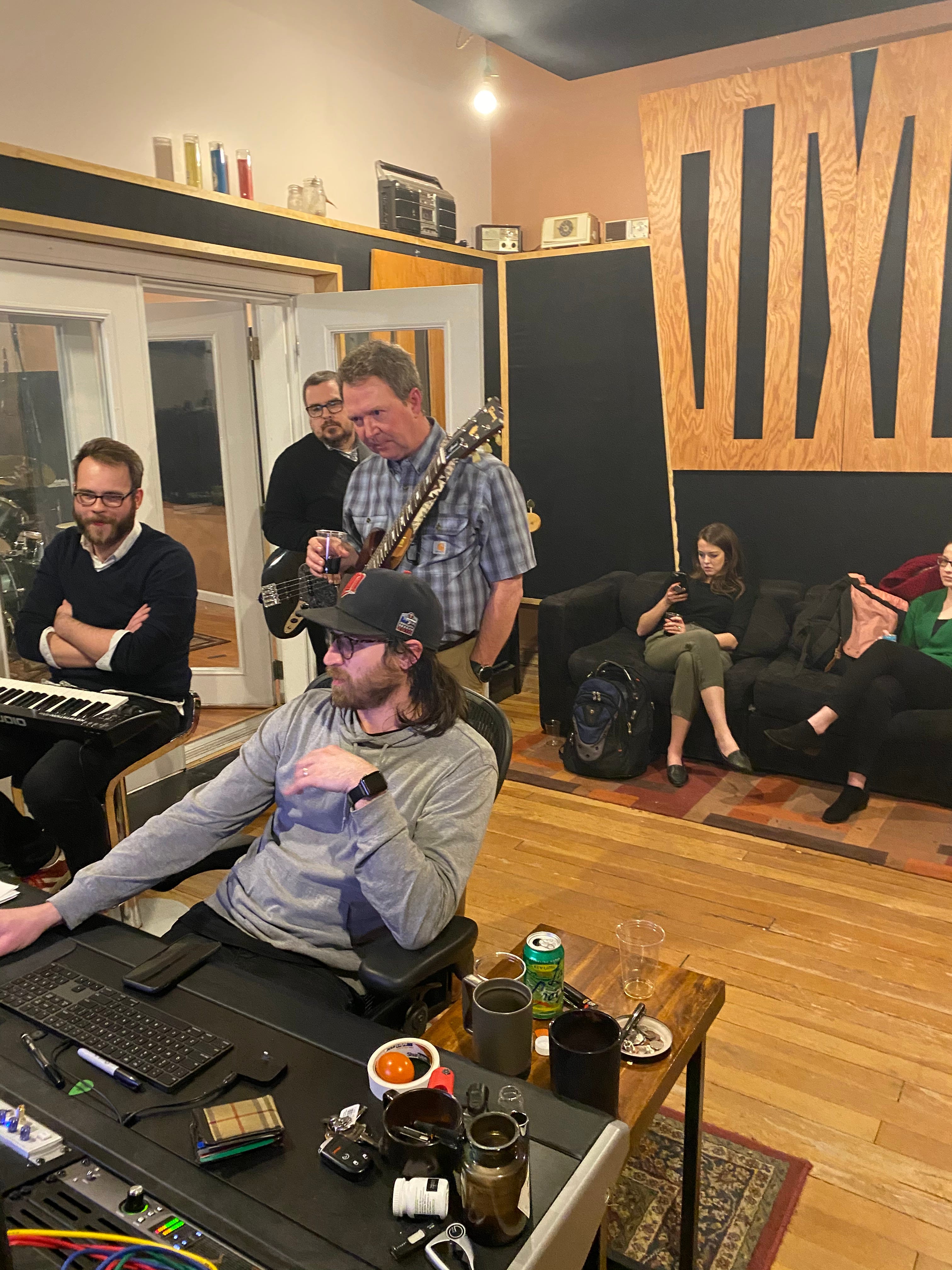
After releasing The 14o8’s Ad Astra back in 2019, I was inspired to write a Christmas song. I wasn’t sure what the song would be about, but wanted to create something with this talented group of people and record it live at Griffin Landa’s The Establishment studio in downtown Des Moines before he vacated the space as his personal music career took a new leap. Griffin is an extremely talented musician and the bassist for the internationally-successful American metalcore group, The Acacia Strain, with which he still actively tours—they have upcoming dates in Europe. He was able to squeeze us in February of 2020 on a snowy afternoon and we created Christmas This Year. This is the story of that song.


As fate would have it, the world would soon shut down as part of the global COVID-19 pandemic and this band project of co-workers along with it, but we were able to pull together some final recordings which I’ll always cherish.
As I look back through my Moleskine of song notes, I found a page of mostly-forgotten thoughts about homemade holiday treats, snowy memories and the behemoth GI Joe aircraft carrier my brother received from Santa one year that I toy-fully and embarrassingly tried to rhyme with merrier. Ha!
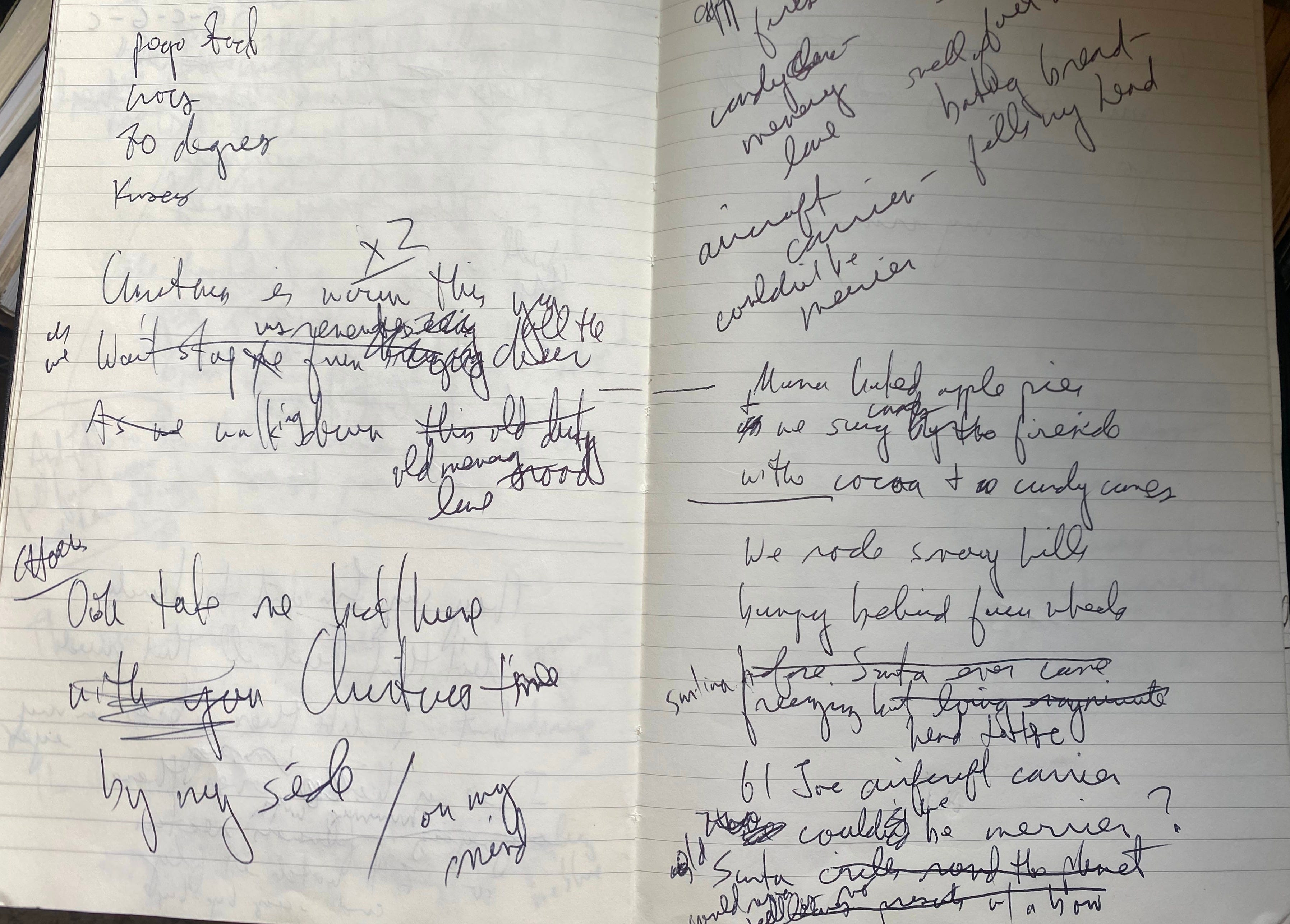
The song didn’t go in that direction. It, thankfully, had other plans. But I did find the origins of the opening line that became the North Star of the song scribbled as “Christmas time with you by my side.” This line eventually became the opener as “Christmas this year will be different my dear without you here right by my side.” The line offered up quite a bit of internal rhyme and set the stage nicely for a story.
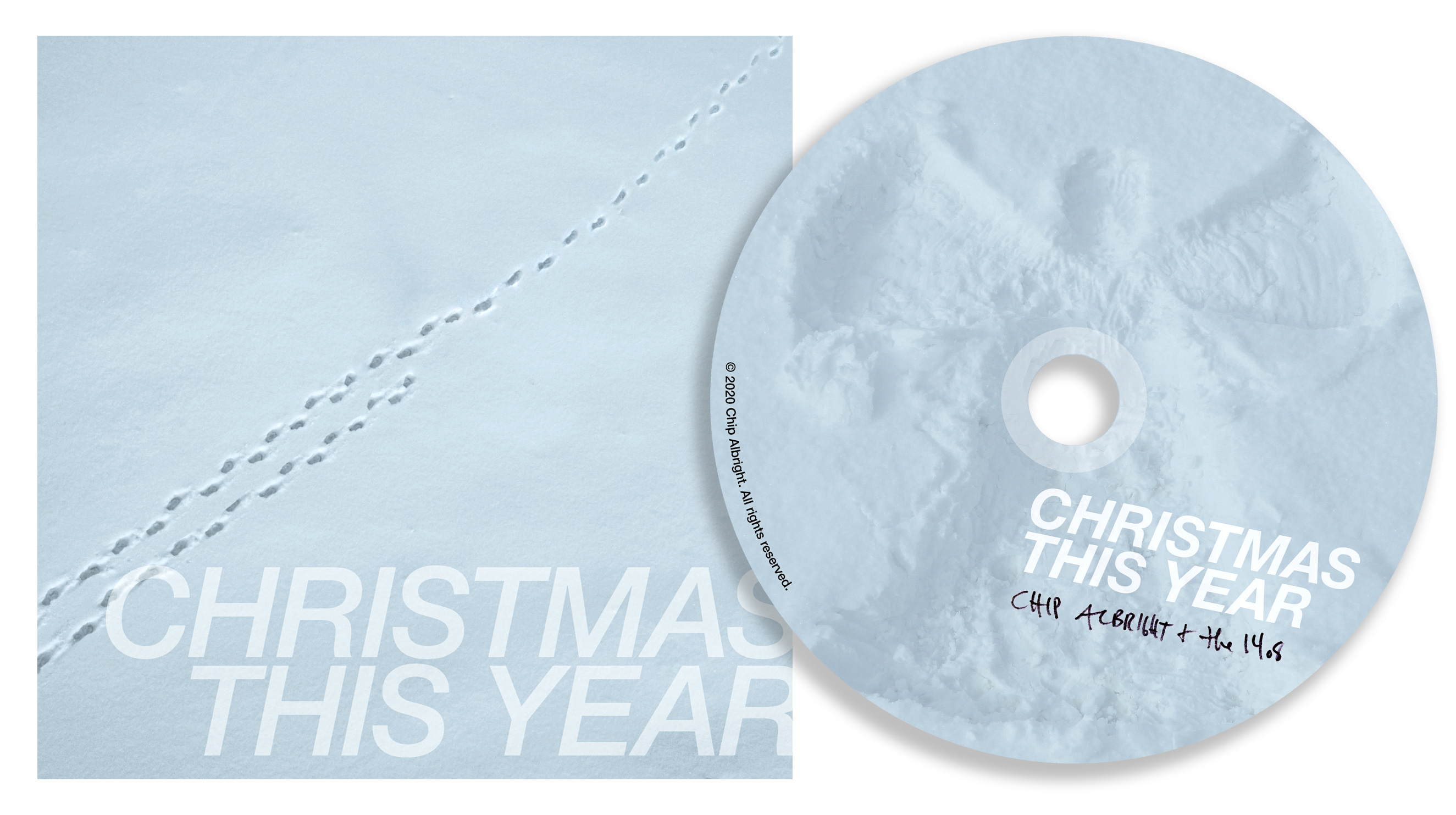
It is well-known that many people deal with holiday depression and other seasonal affective disorders, so I decided to be extremely intentional in penning a sad, but cathartic tribute—an empathetic vignette about an older couple where one member would be spending their first Christmas without the other.
In June of 2019, long-time children’s advocate Jody Reynolds passed away. Jody was married to Stan Reynolds for 51 years, and together they were an absolute force of good in the Des Moines and central Iowa community. They took Variety – the Children’s Charity to the next level and made so many lives better by being kind, creative and caring people. I recommend reading both of their obituaries (linked above) to learn more about the enormous amount of joy they created for others.
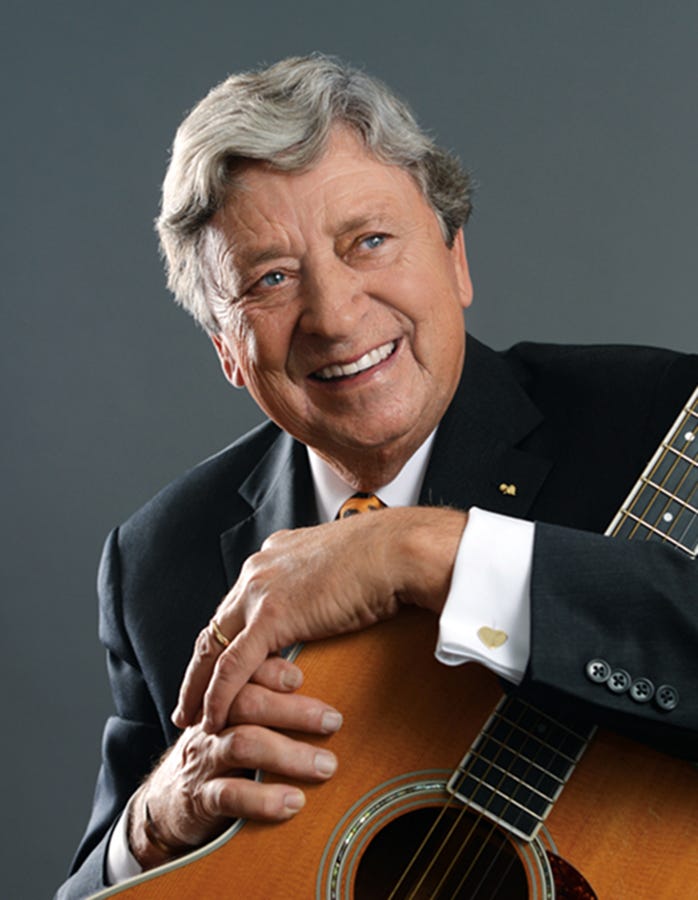
Although I didn’t know Jody personally, I had chatted several times over the years with her husband, Stan, and often interacted with several of their adult children. A fascinating guy, Stan loved to play the guitar (even chumming with Robert Zimmerman before his Bob Dylan days at the University of Minnesota), lived next door to our close friends the Schalls, and was clearly the kind of person to learn more about and respect. Here’s a pic of Stan with his classic Martin.
I began to think about the beauty of the holidays and the wonderful traditions associated with Christmas, but how hard it must be for someone like Stan to spend that first Christmas apart from his lovely wife after a 51-year marriage. It moved me.
We, too, had experienced quite a bit of loss, with cancer quickly taking my wife’s mother (Connie Price) from us in November of 2018 and placing my ailing father-in-law, Keith, in our full-time care. Catharsis had been very helpful for me as we worked through these challenges, and it inspired quite a bit of the writing on the Ad Astra album, especially the song Waters Will Fall.
In its original Greek, catharsis means “cleansing.” Today it is more commonly understood as a psychological term to help individuals release strong feelings and new insights through embracing difficult emotions from loss or other tragedies. Music plays a very important role in facilitating these emotions and finding catharsis.
I sought out to conjure just that—a Christmas song that would express the emotions of a family experiencing their first Christmas together without one of their angels still here in this Earthly world. They would honor and embrace their sadness with music and joy. They would find peace through celebration.
The song slowly begins with a melancholic bass line by Mike Irwin sprinkled with some wintry synthy keys from Michael Davis to help set the mood:
“Christmas this year will be different my dear without you here right by my side.
Oh, darling you we were always so true well this Christmas I’m blue to bring the Yuletide.
Oh, don’t you fear our children are near to bring Christmas cheer all through the night.”
From there, it works into the chorus and invites the audience to sing along,
“We’ll sing hallelujah directly to ya.
Bells will be ringing.
You know we are singing.
We’ll sing hallelujah directly to ya.
Snow it is falling, can you hear us calling?”
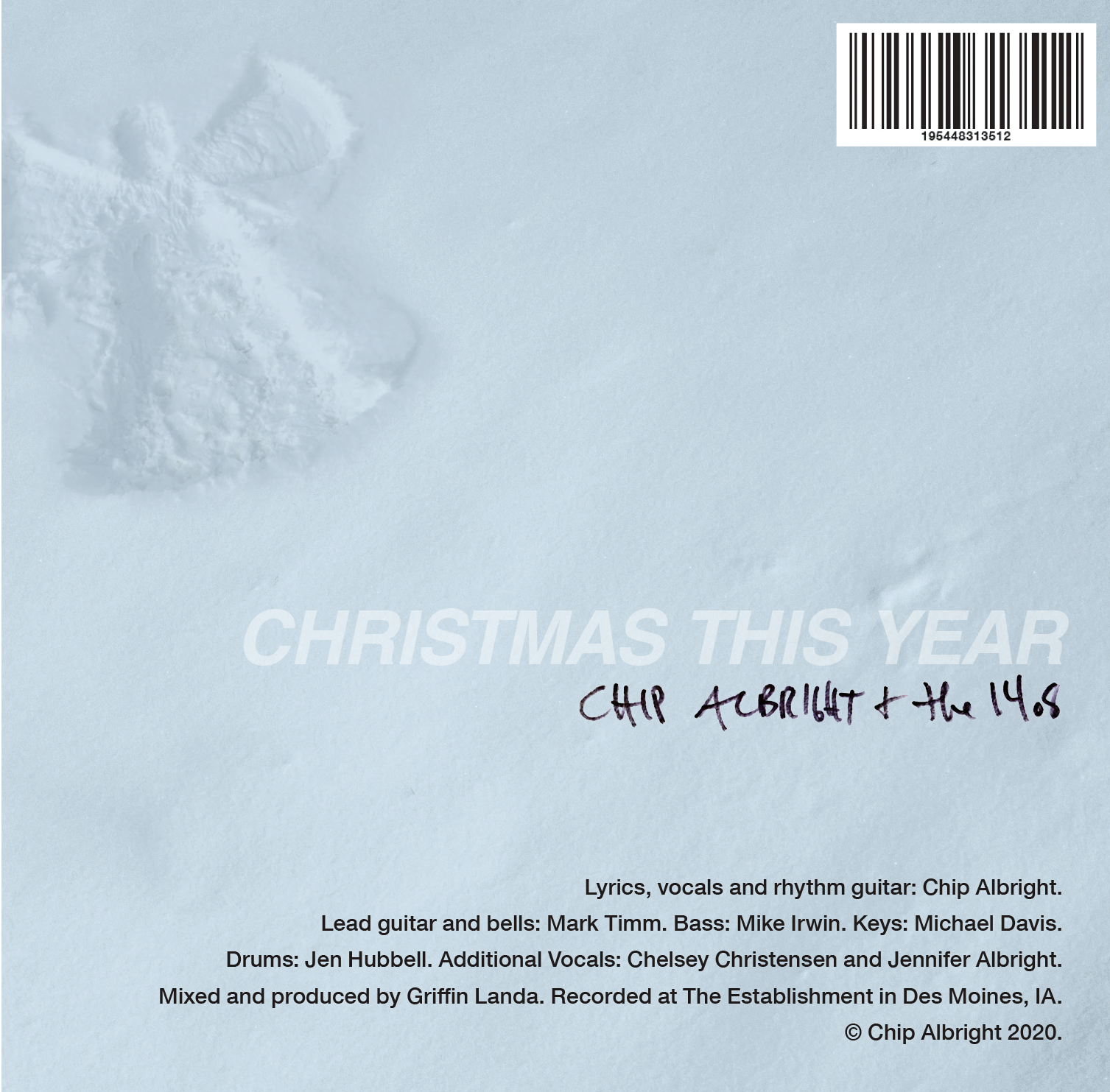
Mark Timm and Michael Davis take us on a ride with their guitar and keyboard work respectively. The goal was to be emotive. To allow listeners to come along on a slow ride of emotion through music. To join in on the “hallelujahs” with Jen Albright and Chelsey Christensen. To pace along to the percussion with Jen Hubbell. To listen with heart, think of loved ones, celebrate them, shed a meaningful tear and find a smile along the way.
Growing up, my brother and I often heard our Dad say that “it’s better to have loved and lost then to have never loved at all,” paraphrasing the great English Poet Alfred Lord Tennyson’s In Memoriam A.H.H.
According to InterestingLiterature.com, it is “One of Tennyson’s most ambitious poems, and one of his most celebrated, is a long elegy he wrote for the death of a friend he knew from his student days at Cambridge. In Memoriam A. H. H. is divided into 133 cantos – shorter lyric poems – which, collectively, make up one long elegy for Tennyson’s friend Arthur Henry Hallam, who died suddenly of a brain hemorrhage in 1833, aged just 22.
Tennyson, himself only in his early twenties when Hallam died, was inconsolable: his grief for his close friend inspired a number of poems Tennyson wrote, especially in the 1830s, but the most ambitious of these was In Memoriam, which he worked on for sixteen years between 1833 and 1849. It was published in 1850, the year Tennyson became UK Poet Laureate following the death of Wordsworth.
Every elegy is a balance of private grief and public mourning, and In Memoriam reveals the complex interrelationship between the two more clearly than most elegies. Throughout the poem, we see Tennyson examining some private memory – a visit to Hallam’s childhood home, or something his friend once said to him – and then working outwards from it to offer some universally applicable truth about death, grief, and love.”
Christmas this year will be the saddest yet for someone. May we think of them. May we find catharsis for our own sadness and celebrate the love we have known in this world. We are all living chemistry experiments, and experiencing grief is part of the process. I find listening to music and writing to be of great personal benefit and, unlike Tennyson who spent 16 years working on the aforementioned poem, I can typically feel an endorphin lift in a 15-minute session.
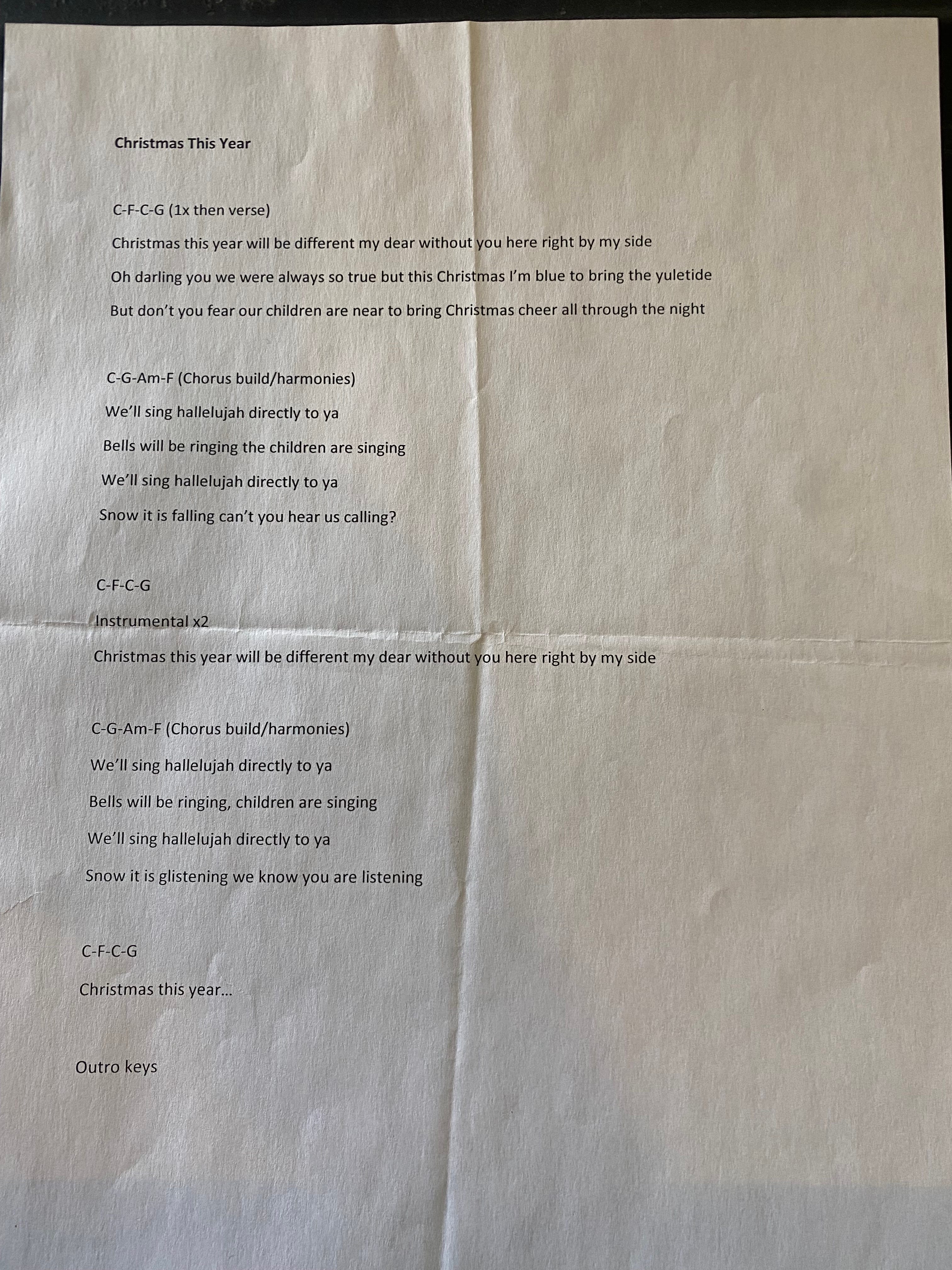
Here’s a stripped-down version of Christmas This Year I recorded today for my paid subs on this Substack adventure and a photo of the original lyric sheet from our recording. Thank you for reading everyone and all the best to you!
Thanks so much. I will share this song with my family this year as we celebrate our first Christmas without Dad. 💔 Glad I have the physical single! ❤️