
Prepare to Care
"Vision is the art of seeing what is invisible to others." Jonathan Swift

According to the latest edition of Caregiving in the US, released by AARP and the National Alliance for Caregiving, “family caregiving forms the invisible backbone of American communities, providing a critical foundation that sustains our nation’s health care system and economy.” As a former caregiver for family members enduring cancer and dementia in Iowa, I can very much relate to the challenges, beauty and daily grind of supporting a loved one in this way.
This article is designed to increase awareness regarding the prevalence of caregiving in America and cites research from many credible resources, including the Pew Research Center, WorldMetrics and AARP. My hope is to catalyze conversations between friends and families about the future, freeing many of current and potential stresses. It’s a tough topic, but I believe visibility on the reality and inevitability of the caregiver journey will improve the overall quality of life for many Americans. The AARP report goes on to say that family caregiving “spans generations and touches every corner of society. More than 63 million adults provide ongoing care for aging parents, spouses with chronic conditions, or adult children with disabilities and serious illnesses—a staggering 45 percent increase since 2015.”
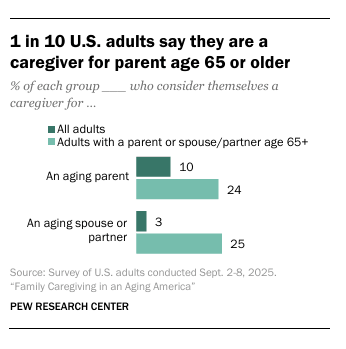
The numbers are mind boggling and reinforce the importance of planning with loved ones. As the great humanitarian and former first lady Rosalynn Carter said, “There are only four kinds of people in the world: Those who have been caregivers. Those who are currently caregivers. Those who will be caregivers, and those who will need a caregiver.”
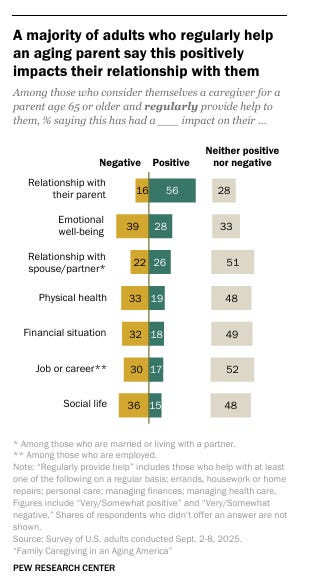
Despite this knowledge, our health care system does not properly prepare and support these amazing caregivers who are mostly left to their own devices to navigate these changing and choppy waters. This is unfortunate because while challenging in many ways, caring for a loved one is an incredible human experience full of emotion, resilience and spirituality. Such efforts should be celebrated and subsidized more in our modern society. Blessed are the merciful caregivers. Unfortunately, most of them are underprepared and overburdened, with many experiencing severe hardships that go unseen.
Caregivers Are Stressed
“The sobering statistics paint a picture of caregiving as a heroic marathon run on a treadmill of relentless, underestimated demands, where the caregiver's own life, health, and finances are the quiet, crumbling collateral damage,” writes Thomas Reinhardt in a 2026 World Metrics report. Many caregivers endure tremendous stress as they shoulder the heavy load often without consistent assistance and respite care. This “heroic marathon” would be less arduous if people had more tools, resources and knowledge before they started this long run, especially understanding that personal respite care is a vital element of a positive caregiver experience with programs like TCARE.
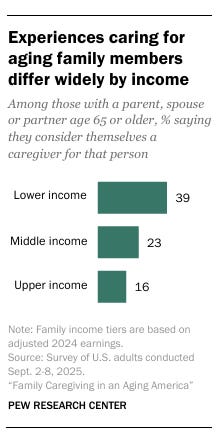
“In the U.S., family caregivers provide $470 billion in unpaid care every year, 70% say the emotional burden feels extremely difficult and 60% report major physical strain,” according to the World Metrics Report. Here are some other important contextual statistics from the report.
70% of caregivers report fair or poor health, compared to 30% of non-caregivers
65% of caregivers report spending more time on caregiving than they anticipated
45% of caregivers report unmet medical needs for the care recipient, and 35% report unmet emotional support needs
The average annual out-of-pocket cost for family caregivers is $7,000, with 10% spending over $20,000
60% of caregivers report symptoms of anxiety, and 50% report symptoms of depression, exceeding clinical thresholds
40% of caregivers want training on caregiving tasks (e.g., wound care, medication management), but only 15% have access to it
65% of caregivers believe they need more emotional support, but 50% have not received it from community resources
Women make up 65% of family caregivers, compared to 35% of men

Sandwich Generation
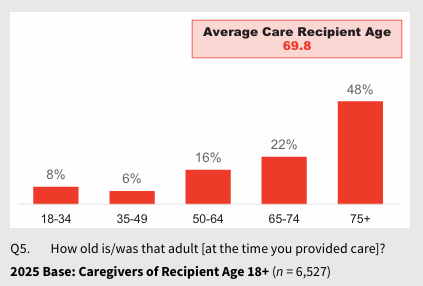
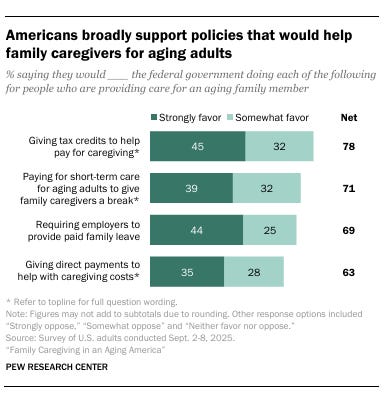
The term "sandwich generation" was introduced in 1981 by social workers Dorothy Miller and Elaine Brody to describe adults, typically in their 30s to 50s, who are "sandwiched" between dependent children and aging parents requiring care. The average caregiver today is 51 years old. Among them, “approximately 16 million sandwich generation caregivers balance care for both adults and children simultaneously” according to AARP.
Rising Costs of Assisted Living
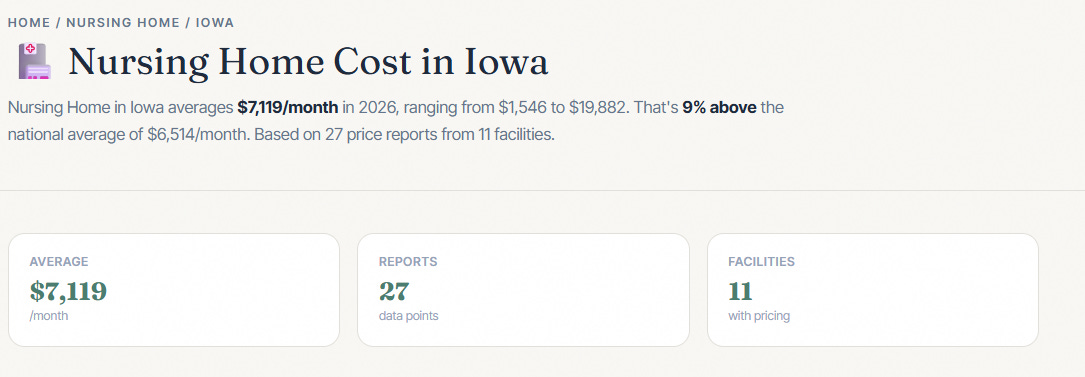
According to another AARP Report, long-term care costs increased significantly from 2019 to 2024, led by nearly a 50 percent increase in costs in home care and assisted living. Long-term care costs continue to climb, with adult day services rising 33 percent, and nursing home costs jumping 25 percent. More recently, nursing home costs are up another 4.6 percent, and home care costs have jumped 7.9 percent from May 2025 to May 2026, according to the U.S. Bureau of Labor Statistics. Since 2021, home care inflation has risen 39 percent, compared to 27 percent inflation for general services and 26 percent for day care and preschool costs. It’s increasingly out of reach for most households to afford and often requires creative manipulation of personal assets and clever “Medicaid spend down” methods.
In addition, “only about 7 to 8 million Americans, or roughly 2%–3% of the population, have long-term care insurance,” according to the JRC Insurance Group, which means many families are scrambling for assets and options in times of caregiving need because Medicare generally doesn’t cover assisted living. This reality has many Americans reeling for solutions, creating tremendous stress and financial hardship.
As a former family caregiver, I decided to get my insurance license in early 2025 when I discovered an innovative, cost-effective policy that focuses on caregiver wellness and home health care to help make ends meet. It would have been a big help to us if we’d had it in place before my in-laws needed our assistance. In the last 18 months, I’ve learned an enormous amount about our convoluted system and am proud to have helped several folks navigate challenging situations to improve their quality of life as they healed. It’s not a conversation people naturally want to have, but it is an important one that can prevent much tougher situations later on.
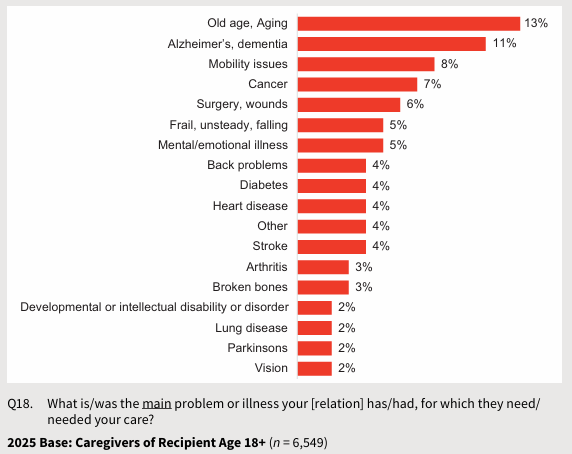
With caregivers being the “invisible backbone” of the system, it’s critical to identify allies in all directions and early on in the process for better outcomes for both patient and caregiver. We simply don’t know what we don’t know. One major and important trend I like to counsel my clients on is the proper utilization of home health care. Home health care and the “Hospital At-Home” trends are a direct result of both consumer preference and a health care system that is desperately searching for savings. The health care industry is enamored with it and its delivery will soar in the next decade as our population ages dramatically.
The Role of Home Health Care
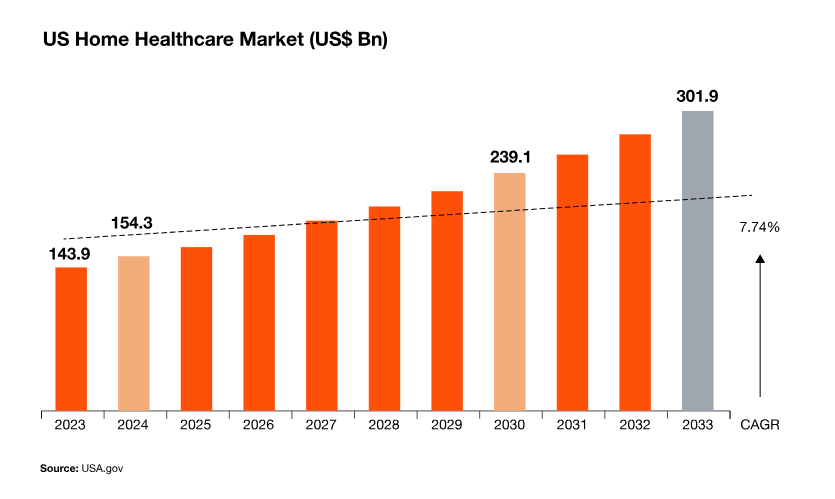
According to PWC.com, “Home care is a gamechanger for expanding access, cutting costs and fostering seamless communication between patients and providers. Other health care industry outfits like the Arcadia Care Journey, reinforce this claim, “When a patient experiences an acute event that requires hospitalization, it is common for them to need care once they leave the hospital. After this acute inpatient stay there are multiple post-acute care options for a patient, with the two most common being skilled nursing facilities (SNFs) and home health care. Wherever a patient goes after their inpatient stay, the goal of post acute care is to improve the patients’ health status while keeping down overall costs and the potential for complications. Overall, we found that home health care is associated with substantially better long-term outcomes in regards to cost, readmission rates, emergency department (ED) rates, and mortality; additionally, timely home health access is critical to minimizing adverse outcomes for patients and reducing costs”. Last fall, we experienced this first-hand when my wife’s Uncle Pete was struck with sepsis, requiring hospitalization and a three-week home health care stay with us. You can read about that personal health care experience here. We learned a lot about Medicare Advantage going through that process together.
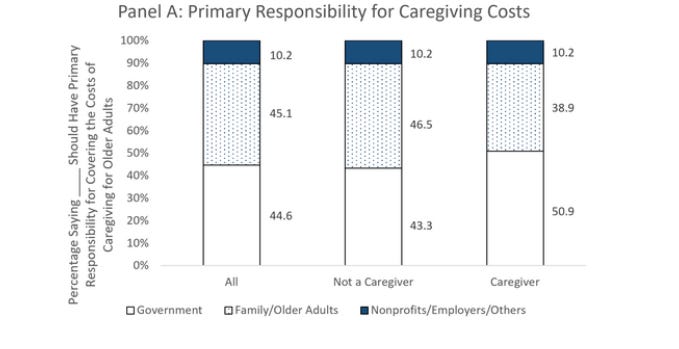
The combination of home health care and comfortable convalescence provided a preferred environment for healing. Pete’s preference to heal outside of a skilled nursing facility is not uncommon, according to USA.gov, “the US senior population will exceed 70 million by 2030 and many prefer the convenience and affordability of home-based care.” The National Institute on Aging confirms a strong trend toward aging in place, powered by digital tools like telehealth and hospital at-home models. Long story short, seniors want to age at home and that means home health care and family caregivers will continue to take on a larger share of the load.
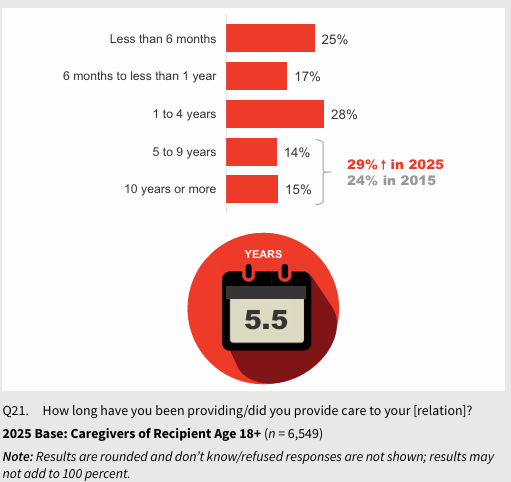
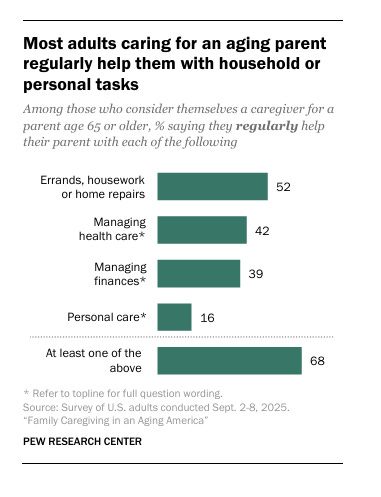
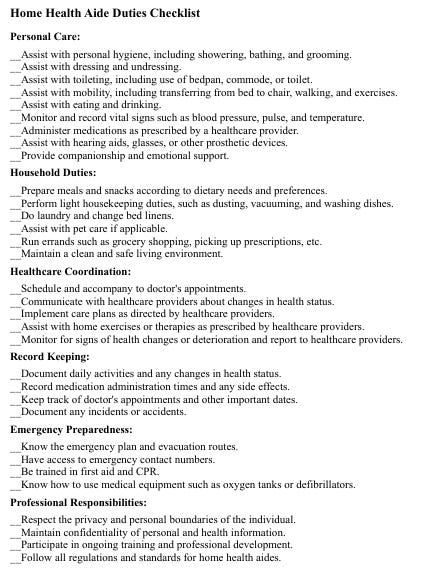
Home health care offers a range of specialties these days including enterostomal and chemotherapy as well as various skilled nursing, physical therapy, occupational therapy, speech pathology and other services. These specializations bring the “Hospital At-Home” model to life, but the home health aide is often the workhorse in assisting caregivers to find much-needed respite and share the workload. Below is a list of duties often performed by home health aides according to SeniorSafetyAdvice.com that all caregivers should be mindful of as they manage the care of others. Bathing and dressing are two challenging tasks alone that can often be outsourced with a visiting home health aide relieving the caregiver of a difficult task.
In honor of America’s 250th anniversary, here’s a FREEDOM checklist to help folks navigate a timely conversation about modern day caregiving based on my personal experience and industry insights. It is by no means a panacea to the systemic issue of elder care, but it can certainly improve the quality of life for those willing to engage in an honest conversation and find some FREEDOM from an issue that is seemingly inevitable for so many of us.
CHIP’S TIPS: FREEDOM CHECKLIST
F: FOSTER a conversation between loved ones regarding the possibilities of someone needing extended care in the future. Getting started on this conversation is often the hardest part. The idea of losing any perceived independence as we age is challenging, but this conversation is meant to enhance quality of life, not detract from it. The earlier you have this talk, the better—many alternatives become unavailable once a loved one starts experiencing cognitive impairment or an inability to perform normal activities of daily living (ADLs).
R: REVIEW all current health insurance policies and a loved one’s preferences for convalescence. In the business world, this is known as a Situational Analysis. You are simply discovering what may or may not be in place already. Learn what Medicare (or Medicare Advantage) does and does not cover for convalescent care for loved ones 65 and over in their individual plans. (Here’s a link to the Medicare site that is pretty clear about its general lack of assisted living coverage.) Review any existing supplemental Short-Term and Long-Term Care policies for Daily Benefit Amounts, Elimination Period and Activities of Daily Living (ADL) stipulations to understand the overall coverage. (The average short-term rehabilitation is between 3 weeks and 3 months. The average long-term end of life stay in a facility is closer to 14 months).
E: EXPLORE ways to minimize discomfort and distress in the event of a future need. What does a 3 to 6-month period of recovery look like? Is the loved one’s home capable of allowing for convenient convalescence? Is there main floor access to bath and bed in the home? Will a ramp need to be added? What does the local social support system look like? What is the proximity for a family or friend caregiver to assist? Are they open to living with someone else while care is being administered? Is there a preferred local skilled nursing facility if needed? Would they rather have services like physical therapy performed in their home? What’s the viability of adding a supplemental insurance policy that could fit a budget to help fill the gaps if needed for convalescent care? (Most policy premium rates are determined by attained age for the insured, so the monthly premiums do increase the longer individuals wait. It’s also important to note that most policies will not cover folks already in need making approval from underwriting more challenging).
E: EMBRACE caregiving and a strategy for healing and recovery with close friends and family through the creation of a family caregiver contract or personal care agreement. These agreements create transparency for interested personal parties and are critical in preventing many issues. Here’s a sample you can print off for reference from AgingCare and more information from the American Council on Aging regarding their importance especially when it comes to the Medicaid Spend Down process necessary for many families. Formalization of a family caregiver contract can go a long way toward preventing future conflict and stress.
D: DOCUMENT all decisions, policies, and intentions. Store the paperwork for safekeeping in an accessible area with all other life directives (wills, family trusts, etc.).
O: OPTIMIZE the present. Regardless of any potential need for care, life is meant to be lived and cherished. Music, nature, socialization, proper hydration, staying active and art are some of my recommendations for being happy and in the moment as we age. Life is a gift and so is aging. There are no doubt numerous challenges but finding a way to smile and see beauty daily in every life stage sure makes for a more pleasant experience.
M: MOTIVATE and thank others. Encourage your network to replace worry and indecision with a personal plan, too. Our “invisible caregivers” need all the advocacy that can be found in the system before they are called on for duty. And, when you see a caregiver hard at work let them know they are special. Offer to spell them for an hour or two sometime so they can find a little personal respite in a long walk, live music or anything that would just allow them to prioritize some of their own needs. These hidden helpers could use a lot of hugs and encouragement for their hard work. Caregiver burnout is all too real.
Discussions like this are easy to put off, but totally worth having while you and your loved ones are still (at least relatively) healthy and independent. As a sandwich generation caregiver and insurance agent, I am available for consultation at chip@albrightspark.com. When I’m not writing or sharing music, I am helping others prepare to care in creative and strategic ways. As the great Anglo-Irish satirist and Gulliver’s Travels author Jonathan Swift wrote, “vision is the art of seeing what is invisible to others.” Caregiving is beautiful and should be seen with respect and admiration.
Related Caregiving “Chip Happens” Articles
Helping Uncle Pete Get Back on His Feet

The silent majority living with us is hidden behind fear and the uncomfortable reality of truth.
insightful!